- 720-727-6652
- info@treeservicewestminsterco.com
- Mon - Fri: 10:00 - 18:00
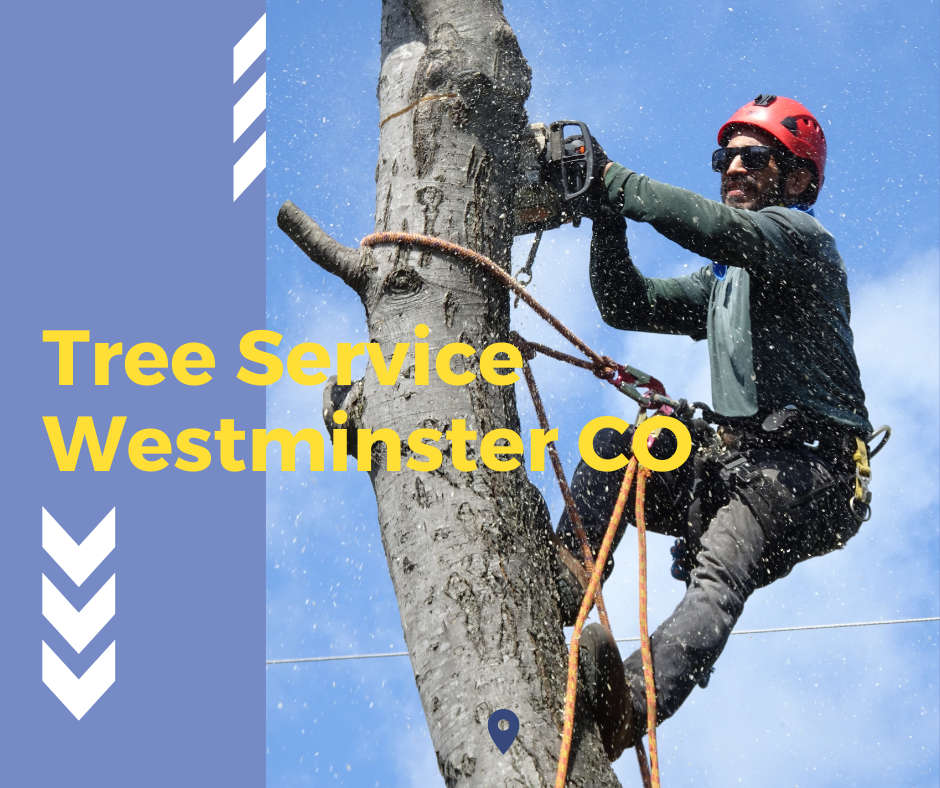
Palm tree removal addresses an existing palm on a property that needs to come down, whether because of declining health, storm or cold damage, or its location relative to structures. This page covers removing an existing palm, not routine palm care such as fertilizing or trimming a healthy tree.
Removing a palm involves different techniques than removing a broadleaf tree, including how the trunk is cut into sections and how the crown of fronds is brought down safely. Avoid climbing a palm or cutting fronds yourself. Our tree services in Westminster begin with an assessment of the specific palm and the surrounding property before removal work is scheduled.
A palm tree removal request usually concerns one particular palm rather than a general landscape cleanup. Dead palm tree removal is considered when a palm has stopped producing new fronds, the crown has browned completely, or the palm’s central growing point has died, since a palm generally cannot recover once that growing point is lost.
A damaged palm tree may also be a removal candidate after storm exposure, cold injury, trunk damage, or a worsening lean. Because a palm’s trunk does not add structural wood the way a broadleaf tree’s trunk does, damage near the base or a soft, hollow trunk section is a meaningful concern.
Other reasons an existing palm may be considered for removal include a palm that has outgrown its planting location or interferes with a roofline, walkway, driveway, or nearby structure. A palm does not need to be dead to be a reasonable removal candidate.
A tree inspection can document a palm’s crown condition, trunk integrity, and any visible decay or damage before removal begins. Where trunk damage, decay, or a pronounced lean raises structural concerns, a tree risk assessment can help evaluate the level of risk before removal is scheduled. Assessing a palm before removal also means looking at what surrounds it, including structures, fences, utility lines, and neighboring property, since these factors influence how the trunk and crown are brought down.
Homes, roofs, driveways, walkways, pools, fences, and parked vehicles are common considerations when a palm is being removed. A tall palm trunk or a heavy crown of fronds near these areas often means the trunk must be sectioned and lowered in pieces rather than felled in one motion, which affects both the approach and the access needed around the property.
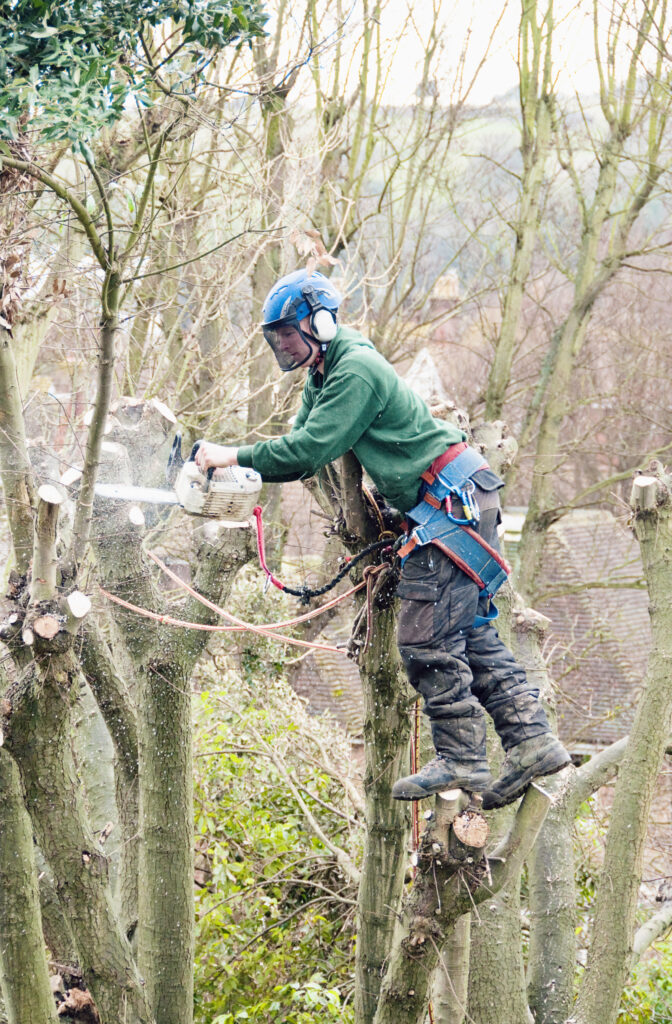
Removing a palm generally involves taking down the crown, including the remaining fronds and any fruit or seed clusters, before the trunk is cut into manageable sections from the top down. This differs from removing a broadleaf tree, which typically involves limbs branching in multiple directions rather than a single tall trunk topped by a frond crown. University extension guidance on palm frond and crown structure explains how palms grow and shed fronds differently than broadleaf trees, which is part of why palm removal is handled differently. Do not attempt to remove palm fronds or cut a palm trunk yourself.
A palm with a severely compromised trunk, a sudden lean, or a crown that is actively shedding large fronds over an occupied area may call for emergency tree service rather than a routine appointment. Stay clear of the palm and contact emergency authorities if people face immediate danger. For a palm touching or dangerously close to power lines, keep away and contact the appropriate utility or emergency authority rather than approaching it.
Palm tree removal should include a clear explanation of how the trunk and crown will be brought down, how surrounding property will be protected, and what access is needed around the palm for equipment and safe working space. Trunk height and diameter, frond crown size, and proximity to structures, fences, or power lines can all affect the scope of a given palm removal.
Palm tree cleanup typically covers fronds, cut trunk sections, and related debris as agreed in the scope of work; confirm hauling and disposal expectations beforehand. Removing a palm does not automatically include removing the remaining stump. If you want the stump addressed as well, ask about stump removal or stump grinding as a separate or combined step.
Palms are not native to Colorado and are not a common part of the local landscape, but some Westminster property owners grow a palm as an ornamental planting, in a container, or in a sheltered spot on their property. When one of these palms is dead, damaged, or otherwise needs to come down, the removal process differs from removing a typical Colorado shade or evergreen tree because of how a palm trunk and crown are structured.
This page concerns removing an existing palm tree. For removal of other tree types on a property, see our general tree removal service. If a tree poses a significant safety risk, see hazardous tree removal. If a tree has died but is not a palm, see dead tree removal. Keeping these needs distinct helps clarify the requested work.
Call 720-727-6652 to discuss a specific palm, its condition, and what is nearby. Ask about the proposed removal scope, stump and debris handling, and scheduling. Share existing photos or observations without climbing the palm or approaching a damaged trunk yourself.
A palm may need to be removed because it has died, sustained significant damage, developed a hazardous lean, or grown into conflict with a structure, driveway, or other part of the property. Unlike routine trimming, this addresses an existing palm that a property owner has decided should come down entirely.
Yes. A palm that has lost its growing point, stopped producing fronds, or suffered severe trunk damage is generally not expected to recover and is a common candidate for removal. The palm’s condition should be assessed first to confirm removal, rather than continued monitoring, is the appropriate step.
The crown of fronds, along with any fruit or seed clusters, is typically taken down first, followed by cutting the trunk into sections from the top down. This sectional approach helps manage a tall, narrow trunk safely, particularly near structures or in limited-access areas.
Not automatically. Removing the trunk and crown is a separate step from addressing what remains at ground level. If you want the stump taken out as well, ask about stump removal or stump grinding as an additional or combined service.
A palm’s single, non-branching trunk and top-heavy frond crown require a different cutting and rigging approach than a broadleaf or coniferous tree with multiple branches distributed through a canopy. Palm removal is planned around this distinct structure rather than treated identically to other tree types.
Trunk height and diameter, crown size, the palm’s condition, proximity to structures or power lines, and access around the property can all affect the scope of a palm removal. A tall palm in a tight side yard, for example, may require a different approach than one with open access on all sides.
Tree Service Westminster CO is a locally owned company providing reliable tree care for homes and businesses in Westminster, Colorado. Our ISA-certified arborists offer tree trimming, stump grinding, planting, disease management, and other professional services. We are fully licensed and insured, with a focus on safe, effective, and environmentally responsible tree care.
Copyright 2026 Tree Service Westminster CO| All RIghts Reserved